With the demand for newly built homes subdued, developers and builders are searching for alternative ideas on how to fund and bring their products to market.
There has been an almost total freeze on new projects in the multi-family space, whether it’s rental apartments or condominiums. The type of ultra-dense high-rise buildings that had boomed in the first half of the last decade are no longer contemplated. But there’s still a need for new apartments, and funding models that are either novel or not in the mainstream of the Toronto or Vancouver markets could offer some possible paths forward.
One of the bright stars in the Greater Toronto Area market is townhouses. Year-over-year, new condominium townhouse sales have tripled in the third quarter of 2026, according to Zonda Home’s vice-president of market research, Pauline Lierman.
Since the implementation of the provincial-federal HST rebate on April 1, there have been 3,381 condo townhouses sold – that’s 67 per cent of the yearly total of 5,032 so far. That has led to a surge in new launches; 16 sites had opened by September, and another 22 should be launched by November, according to Ms. Lierman.
Investors buying unsold Toronto condos at 40% discount to original selling price, report finds
There was a time when townhouses were the ugly duckling of the condo space, comprising only a small share of the total in 2021 when more than 30,000 preconstruction condos were sold. According to Ms. Lierman, in this quarter, apartment sales were just 12 per cent (226 of 1,745) of all condos sold in the region.
The disappearance of investor-buyers in the apartment market – those who had no intention of living in the condos they purchased, hoping to either flip them to someone else or rent out the units – has meant that builders have to cater to so-called end users, or someone who wants to move into the apartment themselves.
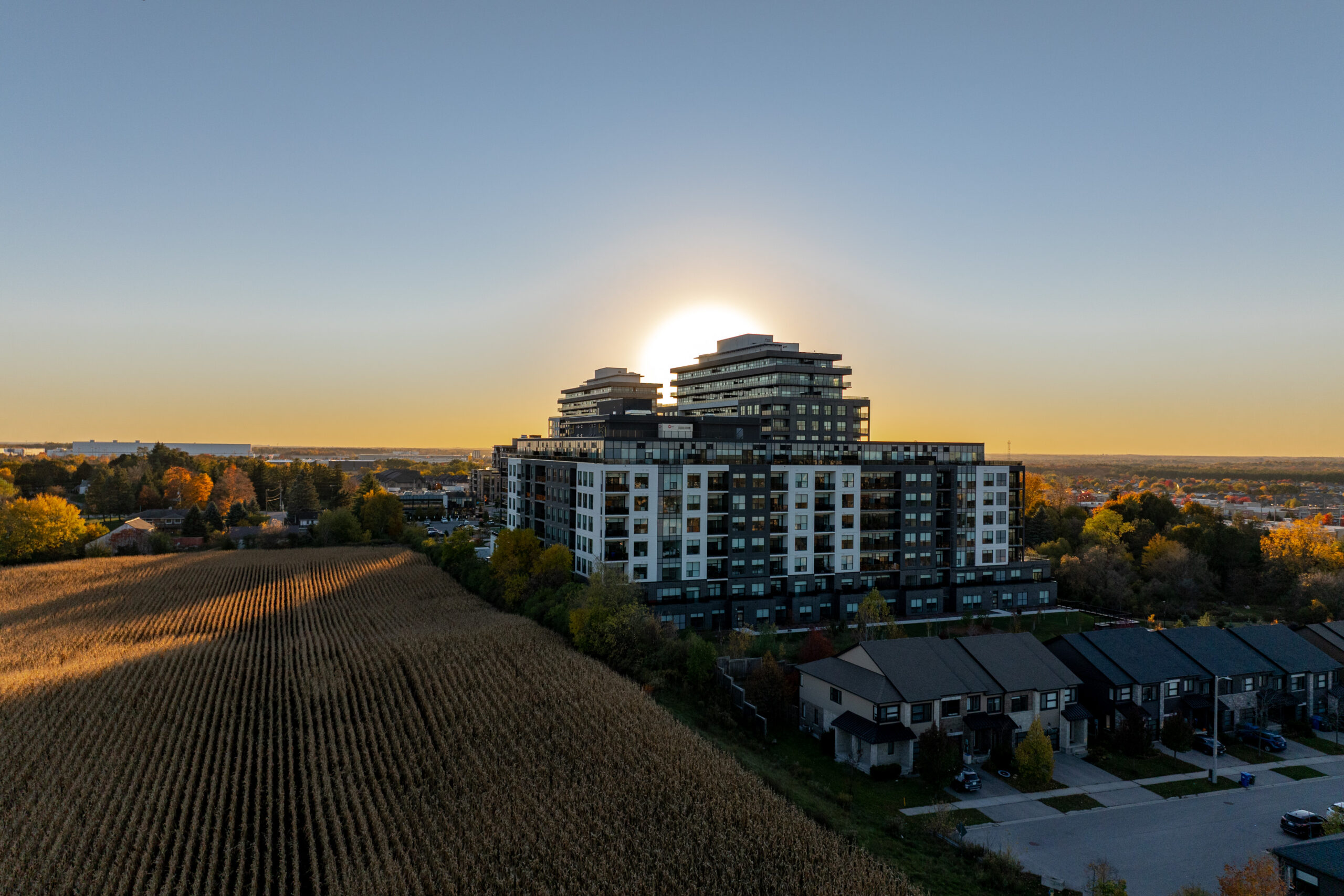
In Guelph, Ont., London-based builder Tricar attracts end users with a development method almost unheard of in recent decades in the Toronto region: it started construction of its apartment building “on spec,” or in other words, not pre-sold.
“It was a little bit out of necessity; there wasn’t a real robust local presale market,” said Adam Carapella, president at Tricar, which started out building rental apartments 40 years ago in London, Ont. In Toronto and Vancouver, the lenders financing huge condominium building projects typically required builders to show they had buyers already signed up before breaking ground. Sometimes 60 to 80 per cent of the planned units needed deposits and sales contracts for banks to approve a construction loan. After starting as a rental builder, where capital tends to be more patient, Tricar had backers that didn’t require all those presales.

The newest, third phase of the Gordon Project is the shorter, eight-storey building.Tricar
The benefits of that model are that rather than waiting an average of five to seven years between signing a preconstruction contract and moving in, buyers with Tricar can see a building that is already taking shape and may take less than a year to complete construction. Flexibility is a key consideration for a downsizer who is selling their home to buy a new condo. Tricar even agrees to sell apartments with contracts that are conditional on the sale of the buyer’s home (another strategy unthinkable in the Toronto market).
“Our product is going to end users 95 per cent of the time,” Mr. Carapella said. Even in the current slow market, the company has sold 100 preconstruction condo apartments this year in the third phase of a nearly-complete 180-unit building on the southern edge of Guelph. The size of the apartments is also enticing to buyers: about 70 per cent of the building is two-bedrooms or larger. “Even the one-bedrooms are fairly livable; 790-830 square feet,” he said, with the larger suites between 1,110 and 1,600 square feet.
Price matters, too: Tricar’s Gordon Square project costs about $600 per square foot, which is even cheaper than big-money bulk-condo buyers are getting in tough negotiations to buy unsold inventory in Toronto. According to a recent report from analysts at Urbanation Inc., Toronto-area bulk sales averaged $763 per square foot, or a 40-per-cent discount from other sold prices in the same buildings.
There are also new ideas in the works in the affordable rental market, with Ottawa’s Nesting Ground recently announcing it had raised $20-million from a variety of philanthropic donors for a fund that would serve as the financial backstop for non-profit housing partners with limited balance sheets that need support to get projects from the planning stage to construction.
According to Graeme Hussey, president of Nesting Ground, the idea behind the Affordable Housing Guarantee Pool (AHGP) is not to raise the construction funds necessary to build out all the projects, but to have hard cash that can serve as collateral for larger loans.
Lender says it won’t relax construction loan standards for condo developers hit by sales downturn
“The analogy is that of a parent guaranteeing their child’s mortgage,” said Mr. Hussey, meaning the cash in the AHGP fund can be leveraged into multiples with lenders willing to extend construction funds. For example, one of the fund’s first projects in Ottawa is with Windmill Developments, proposing two mid-rise buildings with about 200 apartments: each building will likely cost about $150-million to build.
Mr. Hussey previously worked at Cahdco, a building and development company founded by the non-profit Centretown Citizens Ottawa Corporation. In his experience, the lack of solid financial backing killed more good project ideas than any lack of expertise or willingness in the non-profit space. He hopes the fund will help unlock affordable housing that has been stuck at the starting line.
“Right now Nesting Ground has about 12 projects and 2,500 units that we’re hoping all begin construction in the next three years and will be built in the next five,” he said.